
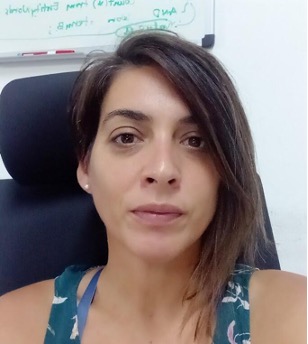
Ismini Baltsavia is a postdoctoral fellow at the Medical School of the University of Crete. She recently completed her PhD in Bioinformatics at the same institution (2024), where she developed and advanced the UniReD tool for protein–protein interaction prediction to explore the biological links between carotid artery disease and major depressive disorder.
She holds a BSc in Biology from the Aristotle University of Thessaloniki and two MSc degrees: Conservation of Biodiversity and Sustainable Exploitation of Native Plants (AUTh) and Bioinformatics (UoC). Her research interests span computational biology, systems biology, network analysis, and large-scale omics data integration.
During her doctoral and research career, she has collaborated with the Biological Computation and Process Laboratory at the Centre for Research and Technology Hellas (CERTH), contributing to the construction and visualization of bioinformatics databases, software distribution and documentation, and the development of pathway–genome databases for archaeal genomes (e.g., Methanocaldococcus jannaschii) using the BioCyc system. She has also participated in the European Horizon 2020 program (Grant Agreement No. 848146) at the Biomedical Research Foundation of the Academy of Athens (BRFAA), investigating pathogenic mechanisms linking cardiovascular disease and depression through protein interaction and pathway analysis. As a postdoctoral research associate at the Foundation for Research and Technology – Hellas (FORTH) she investigated gene regulation, epigenetics, and biomarker discovery in mechanisms of transcription regulation.
Ismini has extensive experience in single-cell RNA sequencing (scRNA-seq) data analysis, genome annotation, and the development of bioinformatics pipelines and software (front- and back-end). She actively supervises undergraduate and graduate students and has taught courses in Biology and Programming in the Medical School’s undergraduate and international programs at the University of Crete.